YIWU & CHINA SOURCING
Country / language
YIWU, ZHEJIANG / CHINA SOURCING
Yiwu sourcing.
Connected to China.
Discover a city built around everyday products, then see the people, production and logistics behind the order. Start with a product idea. Build a sourcing plan around the details that matter.
Home / Yiwu sourcing
THE CITY BEHIND THE PRODUCTS
Why Yiwu belongs
on your sourcing map.
Yiwu is a trading city in Zhejiang, eastern China, known for its small-commodity markets. Its appeal is the variety of everyday products brought together for buyers: gift ideas, home accessories, stationery, bags and seasonal ranges.
For an overseas buyer, that concentration is a useful place to explore a collection, compare finishes and identify supplier options. The next step is to turn what you see into a clear specification, sample and production plan.
YIWU → ZHEJIANG → CHINA
A place to discover products. A starting point for a wider sourcing conversation.

Yiwu city view · 2017 · Photo: MNXANL / CC BY-SA 4.0.


INSIDE THE MARKET
See the range.
Ask what sits behind it.
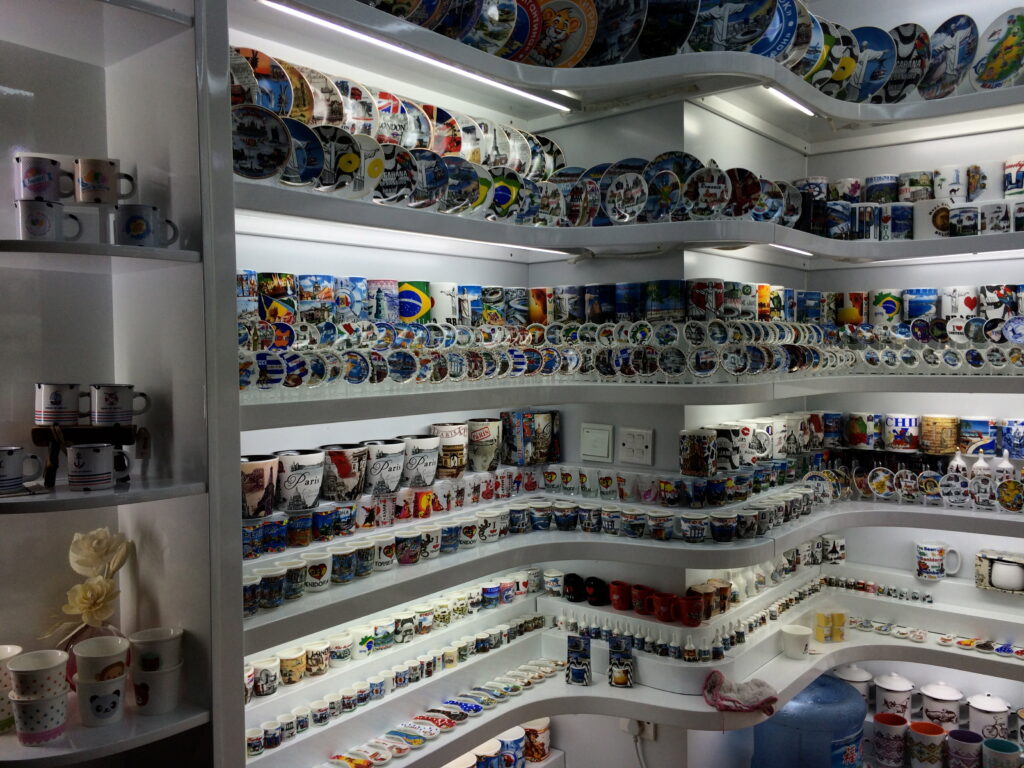
Yiwu International Trade Mart brings product displays and supplier conversations into a physical buying environment. Walking a range can help you compare colours, shapes, materials and presentation that are hard to judge from a catalogue alone.
A booth may represent a manufacturer, a specialist supplier or a trading business. Ask who makes the product, where production takes place and what the quoted version includes. A display sample is a starting point for comparison; production availability, customisation and minimum quantities still need confirmation.
- Look at the finish and construction, not only the shape.
- Record a product code, supplier contact and sample reference.
- Compare product, decoration and retail packing together.
WHAT MAKES THE VISIT USEFUL
Discover the options before you narrow the brief.
The strongest buying plan combines a broad view of the range with a precise description of the version you want.
01 / PRODUCT DISCOVERY
Explore a collection
Review complementary products for a gift set or retail assortment. Identify a shared palette, practical price position and the details that make the items work together. Keep an essential list and an optional list so the range can be refined without losing its purpose.
02 / PHYSICAL COMPARISON
Review the details
Compare weight, texture, closures, decoration and packing in person where samples are available. Label photographs and samples with a supplier and model reference. The useful outcome is a shortlist you can compare after the visit.
03 / MIXED ORDERS
Plan the assortment
Several suppliers can contribute to one buying project. Record quantity and packing by SKU, then review the receiving and consolidation plan. A combined shipment still needs separate product minimums, approvals and supplier-ready dates.
GIFTS & EVERYDAY GOODS
Find the direction for your next range.
Explore the six product families, then use each category guide to define materials, dimensions, branding and packing.
01 / PRODUCT CATEGORY
Kitchen & dining
Tableware, drinkware & everyday kitchen tools.
02 / PRODUCT CATEGORY
Home & living
Storage, textiles & considered home essentials.
03 / PRODUCT CATEGORY
Beauty & personal care
Beauty tools, bags & bathroom accessories.
04 / PRODUCT CATEGORY
Outdoor & travel
Bags, bottles & practical travel accessories.
05 / PRODUCT CATEGORY
Seasonal & gifts
Holiday collections, gifting & party supplies.
06 / PRODUCT CATEGORY
Pet & everyday essentials
Pet accessories, bags & practical daily goods.
UNDERSTANDING CHINA’S SUPPLY CHAIN
One finished product.
Several connected specialists.
A supplier may coordinate several operations, or different partners may handle each stage. The product and order scope determine the route.
01 / MATERIALS
The starting specification
Fabric, metal, ceramic bodies, coatings, closures and other components define the product. A material choice can affect finish, minimum quantity, testing and the processes available.
02 / PRODUCTION
The manufacturing process
Cutting, sewing, forming, moulding or assembly turns the specification into an item. Confirm the actual producer, which operations are subcontracted and how the approved sample is controlled.
03 / BRANDING
Your product version
Printing, engraving, labels and decoration create the selected version. Review the method on the actual substrate and keep artwork, position and colour approvals tied to that product.
04 / PRESENTATION
Packaging & assembly
Boxes, inserts, sleeves, cards and set assembly may involve additional suppliers. Approve the complete packed item and component list before treating the gift set as finished.
05 / HANDOVER
Checks & cargo readiness
Inspection findings, receiving counts and shipment records answer different questions. Reconcile them before release and arrange the transport scope for the actual cargo and destination.
The working connection is the specification: a product code, approved sample, artwork revision and packing reference that every party can follow.
BEYOND A SINGLE CITY
Different places.
Different industrial strengths.
Yiwu is part of a wider sourcing landscape. These regional examples explain why a product found in a market may be manufactured or supplied through another industrial cluster.
YIWU / ZHEJIANG
Product discovery & trade
A small-commodity trading hub where buyers can explore everyday product directions and meet supplier contacts. Use the market to build a shortlist, then verify the proposed product, producer and commercial arrangement.
YONGKANG / ZHEJIANG
Hardware & kitchenware
Yongkang’s hardware cluster includes kitchenware and other metal-product industries. For a proposed metal item, construction, finish, components and the actual production process still need to be reviewed at supplier level.
KEQIAO / SHAOXING
Textiles & fabric processes
Keqiao’s textile ecosystem connects fabric-related activities such as spinning, weaving, dyeing and garment production. For a bag or home textile, specify fabric construction, colour reference and the finished-product requirements separately.
SHENZHEN / GUANGDONG
Electronics & components
Shenzhen provides another example of specialised industrial clustering, with electronic information and component industries. Electrical gifts need a technical sourcing brief: functionality, product requirements and specialist support are assessed for the proposed item.
Regional examples introduce the wider sourcing landscape. The proposed supplier, production location and support scope are confirmed for each project.
THE DETAILS BETWEEN PRODUCTION & EXPORT
A product becomes an order
when the versions stay connected.
Keep the approved item, its branded presentation and its release record together.
PRODUCT & PACKING REVIEW
Check the version you approved.
A mug, tote or organiser can change between the first sample and production. Review the specified construction and finish, the logo application and the actual retail pack. If an inspection is required, define observable checks and the decision maker before the goods are ready.
BRANDED PRESENTATION
Build the complete gift.
A gift box, insert, card and product may come from different sources. Check their fit as a complete set, record each component and approve the final assembly. Changing a bottle, notebook or folded bag can change the box you need.
Sourcing and packaging process illustrations.
FROM INLAND SOURCING TO OVERSEAS DELIVERY
The supply chain continues
beyond the factory gate.
The coastal port system is one part of the wider logistics network serving international trade.

Ningbo-Zhoushan Port, Chuanshan area · 2020 · Photo: Nbfreeh / CC BY-SA 4.0.

A WIDER LOGISTICS NETWORK
Connect the cargo.
Keep the records clear.
Zhejiang’s Yiwu–Ningbo–Zhoushan corridor links the inland trading area with the coastal port region in regional logistics planning. For an actual order, the useful question is how the selected suppliers, receiving location and transport provider will work together.
Confirm supplier-ready dates, cargo characteristics and the actual receiving result before reviewing the final shipment. Route, carrier acceptance, freight, documentation and destination handling depend on the cargo and agreed commercial scope.
BEFORE A SHIPMENT IS BOOKED
Know what is ready to move.
- A reconciled product, SKU and carton list.
- Actual packed dimensions and gross weight.
- The status of inspections and open issues.
- The receiving destination and delivery requirements.
- A written transport scope with charges and exclusions.
PLAN A VISIT OR SOURCE REMOTELY
Use a product list to guide the work.
01
Before a market visit
Prepare product references, intended quantities, destination and the buying priorities for each category. Mark essential specifications and questions that can be answered during the visit. Arrange the support and schedule in advance; a general market visit is different from a confirmed supplier audit.
02
During supplier conversations
Record the booth or company contact, model, material, minimum quantity, packing and price basis. Label photographs and samples with the same reference. Ask which operations the supplier performs and whether the quoted item is stocked, made to order or sourced through another party.
03
After selection
Request written quotations and confirm the exact samples, artwork and packing. Reconcile the selected SKU quantities and expected ready dates. A conversation at a booth should be followed by a documented offer before it becomes a production commitment.
04
When sourcing remotely
A structured photo or link list can guide the inquiry without a visit. Keep the brief, supplier questions and sample comparisons connected. Ask for actual product details and approval samples rather than relying exclusively on catalogue images or video.
BEFORE YOU START
Questions about Yiwu and the wider sourcing network.
Do not assume that the market location is the production location. Ask the proposed supplier which company makes the item, where the work is done and which operations are subcontracted. The brief, supplier review and sample approval should cover the actual production route.
Its variety makes it a useful place to explore product directions. A practical order still needs quantities by SKU, supplier minimums, sample and artwork approvals, and a receiving plan. Combining freight does not automatically combine production minimums.
A remote inquiry can begin with photographs, links and a product list. Explain the intended use, approximate quantities and destination. The sourcing scope and sample review can then be discussed; an in-person visit is one route, rather than a requirement for every project.
It can be a starting reference, subject to feasibility and the necessary brand or design rights. Confirm the exact construction, decoration method, packaging, minimum quantity and sample cost. Approve the proposed version rather than relying on the display alone.
Prioritise the product families and bring references, target quantities and the details that must match. Record supplier contacts and model codes during the visit. Leave time after the visit to compare written offers and review the final sample and packing.
Compare the proposed product, construction, quantity, sample support and commercial scope. Identify the contracting company and the actual producer, then ask which tasks are performed directly or subcontracted. Choose the route around the requirements of the order rather than a supplier label alone.
Regional references:
- Yiwu: official city and market background
- Yongkang: hardware and kitchenware cluster
- Keqiao: textile supply-chain background
- Shenzhen: electronic information industries
- Yiwu–Ningbo–Zhoushan corridor: regional planning background
Photograph dates, authors and licences are listed beside each image. Follow the credit links for the original photographs and applicable licences.
LET’S MOVE YOUR IDEAS FORWARD
Ready to explore your sourcing options?
Send a product photo or link, quantity and destination. We’ll work through the sourcing, branding and shipment questions with you.